Almost there! Add $99.0 more for free shipping
Your bag (0)
Cart is empty
Cart is empty

Most hats weren't built to handle real sweat. A cotton dad cap looks fine on day one. After a summer of runs, rounds of golf, and days at the beach, it's got a white salt ring above the brim and smells like a gym bag.
Sweat proof hats exist to solve this problem — but the term gets applied to everything from basic polyester caps to purpose-built performance headwear. This guide covers what actually matters, what doesn't, and what to look for when you need a hat that holds up.

No hat is 100% impermeable to sweat — if you're working hard enough, you'll sweat through anything. What "sweat proof" really means in practice is a hat built from materials that manage sweat effectively: shedding it from the outside, wicking it away from skin on the inside, and drying fast enough that the hat stays comfortable and doesn't develop odor or staining over time.
A genuinely sweat-resistant hat has three things working together:
1. Water-resistant shell fabric. The exterior of the hat repels water — whether that's rain, ocean spray, or sweat dripping from your brow. Water-resistant ripstop nylon with a DWR (durable water repellent) coating is the benchmark. It repels moisture rather than absorbing it, which means the hat dries in minutes rather than hours.
2. Moisture-wicking sweatband. The inner band is where most hats fail. A cotton sweatband absorbs and holds sweat, stiffens over time, and becomes a breeding ground for bacteria and odor. A moisture-wicking synthetic sweatband pulls sweat away from your forehead, spreads it across a larger surface area to evaporate faster, and recovers its shape wash after wash.
3. Antimicrobial treatment. High-performance hats include antimicrobial properties in the fabric or sweatband to prevent the bacterial buildup that causes odor. This matters more than most people realize — a hat worn three times a week without antimicrobial treatment will smell like it within a month.
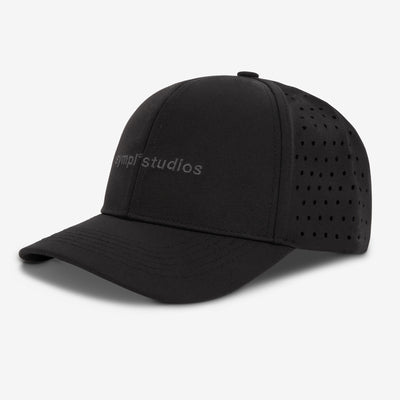
Featured Product
Tech Cap
$39.00
Shop NowCotton is comfortable and looks good. It's also the worst possible material for a sweat-resistant hat.
Cotton absorbs moisture readily and releases it slowly. When you sweat in a cotton hat, the fabric saturates — the hat gets heavy, the brim droops, and a salt ring forms as the sweat dries. Wash it and the stain often doesn't fully come out. Do this enough times and the hat is done.
This isn't a knock on cotton as a material generally. For casual, low-activity use, a cotton cap is fine. But if you're running, hiking, playing golf in summer heat, or spending a day on the water, cotton isn't the right tool.
Ripstop nylon is the standard for performance headwear. Lightweight (typically under 80g for the hat alone), water-resistant, quick-drying, and durable enough to handle daily use without losing shape. Higher-quality ripstop holds a DWR coating longer than budget alternatives.
Polyester is a close second — many running and golf caps use polyester blends. Good moisture-wicking properties, slightly less water-resistant than nylon but still far better than cotton. Most UPF-rated sun protection hats use polyester.
Avoid cotton, linen, or canvas for high-sweat environments.
The sweatband is often where manufacturers cut costs. Look for synthetic moisture-wicking material — the same logic applies here as to athletic clothing. If the product description doesn't mention the sweatband specifically, ask. A hat that's water-resistant on the outside but has a cotton sweatband inside defeats the purpose.
Performance hats should be light. A hat that's over 100g on your head during a run adds fatigue in a way you'll notice after an hour. Structured brims (pre-curved) hold their shape when wet; unstructured brims droop.
Fit matters more for activity hats than casual hats — a cap that moves around on a run or shifts in the wind becomes a distraction. Look for adjustable closures that stay put under movement.
Water-resistant fabrics can trap heat if they're not designed with ventilation in mind. Look for hats with ventilation eyelets or mesh panels on the sides or crown. The brim should not be so wide that it cuts off airflow completely.

Running. The primary use case. You want something light, with a brim wide enough to block sun but not so wide it catches wind. Moisture-wicking sweatband is non-negotiable. Quick-dry construction matters — if it rains mid-run, you want a hat that's dry again before you get back.
Golf. Long hours in direct sun, variable weather, sweating without the intensity of running. Water-resistant hats perform well here — they handle both sweat and unexpected rain. The aesthetic matters more in golf than in trail running, so look for a clean profile.
Beach and water. This is where a floating, water-friendly hat earns its premium. If it goes overboard or gets submerged, you want it back — not sinking. Nylon hats that are water-friendly (rather than just water-resistant) are built for this.
High-intensity training. Gym workouts, CrossFit, HIIT — any environment where you're generating significant heat. A lightweight, ventilated hat that stays in place under movement, wicks aggressively, and doesn't develop odor is the target.

The Sympl Tech Cap was built for exactly the problem above. Shell construction: highly water-resistant ripstop nylon. Interior: moisture-wicking sweatband with antimicrobial properties. Weight: lightweight enough to forget it's on your head.
It's water-friendly in the full sense — not just resistant to rain, but built to get wet. It floats. That matters if you're running trails near water, spending time at the beach, or doing anything where full submersion is a possibility rather than a problem.
The Sympl Tech Trucker Cap is the same performance construction with a mesh back panel — more ventilation, classic trucker profile. Better for high-heat environments where airflow is the priority.


Both come in Black and Gray at $39. Both are built to the same material standard as the rest of the Sympl carry lineup — not accessories treated as afterthoughts.
Hand wash, cold water, mild soap. Most ripstop nylon hats shouldn't go in the washing machine — agitation and heat degrade the DWR coating faster. Fill a sink with cold water, add a small amount of gentle soap, and work it through with your hands.
Air dry only. Never tumble dry a performance hat. Heat breaks down DWR coatings and can warp the brim if it's structured. Reshape the crown while damp and let it dry on a flat surface or over a rounded object.
Spot clean the sweatband after heavy use. Rinse the interior band with cold water after each session and let it air out fully. This extends the time between full washes significantly and is the single biggest factor in preventing odor.
Re-treat with DWR spray occasionally. Water-resistant coatings lose effectiveness over time and with washing. A DWR re-treatment spray (available at most outdoor retailers) restores water-beading performance on nylon hats.
A sweat proof hat uses a combination of water-resistant shell fabric and a moisture-wicking sweatband. The shell repels external water (rain, splashing) while the sweatband pulls sweat away from your forehead and dries quickly. Antimicrobial treatments prevent odor buildup over time. No hat is 100% sweat proof, but performance materials like ripstop nylon with DWR coating come closest.
Water-resistant ripstop nylon is the best material for sweat resistant hats. It's lightweight, dries quickly, resists staining from sweat, and holds its shape under compression. Polyester blends are a common alternative and perform well for moisture-wicking. Cotton absorbs sweat and stays wet, causing staining and odor — it's the worst choice for high-activity use.
Yes — water-resistant hats are excellent for running. They repel sweat and light rain from the outside while a moisture-wicking sweatband manages sweat from the inside. Look for a lightweight hat (under 100g) with a structured brim for sun protection and ventilation. Quick-dry construction is a bonus if you run near water or in heavy rain.
Most water-resistant nylon hats can be hand washed with cold water and mild soap. Rinse thoroughly and air dry — do not machine wash or tumble dry, as heat degrades water-resistant coatings. Spot cleaning the sweatband after each use extends the time between full washes and prevents odor buildup.
The Sympl Tech Cap and Tech Trucker Cap are built from water-resistant ripstop nylon with a moisture-wicking, antimicrobial sweatband. $39. Water-friendly — they float.