Almost there! Add $99.0 more for free shipping
Your bag (0)
Cart is empty
Cart is empty

A weekender bag is the carry you reach for when you need more than a daypack and less than a full suitcase. Two nights in the city. A long weekend hiking. A work trip that's stretched to Sunday. The category sits in a specific sweet spot — and most people buy the wrong thing for it.
This guide covers what a weekender bag actually is, how to choose one, and what separates a bag that earns a permanent spot in your rotation from one that ends up in a closet.
The Sympl Weekender Pack was built to answer every complaint in this buying process — but this guide covers the full category, not just our product.
A weekender bag is a compact travel bag sized for one to three nights away from home. Capacity sits in the 30–45 liter range — large enough for two to three days of clothing, toiletries, and the things you actually need, small enough to carry onto a plane without checking.
The category is broad. Weekender bags show up as soft duffels, structured totes, and backpacks. What they share is purpose: short trips where you want one bag and no checked luggage.
What fits in a weekender bag:
What doesn't fit: a week of clothes, bulky cold-weather gear, anything you'd normally check. If you're reaching for a weekender bag for a seven-night trip, you're using the wrong bag.
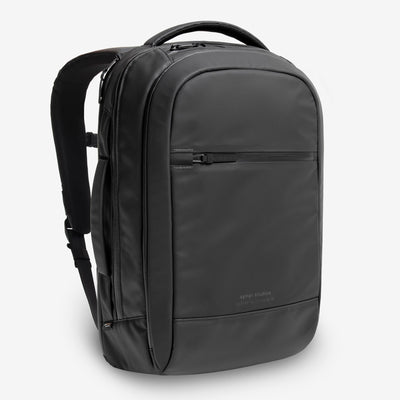
Featured Product
Weekender Pack
$239.00
Shop NowA weekender bag is a compact travel bag sized for one to three nights, typically 30–45 liters. A duffel bag is a general-purpose cylindrical bag that can range from gym-sized to checked-luggage scale. All weekender bags are functionally duffels, but not all duffels work as weekenders — many are too large, have no structure, or lack travel features like luggage pass-through sleeves or interior organization.
The terms are often used interchangeably in retail, which creates the confusion. When you see "weekender bag," you're looking at a specific size category with travel intent. When you see "duffel bag," you might be looking at anything from a 20-liter gym bag to a 100-liter expedition carry.
For weekend travel specifically: look at bag volume, interior organization, and whether it has dedicated pockets for shoes or toiletries — not just whether it's labeled a weekender.
Five things that actually matter:
The target range is 35–45 liters for most weekend trips. Below 35L and you're packing for one night or very light; above 45L and you're probably checking. For reference, the Sympl Weekender Pack is designed for two to three nights and carry-on compliance.
Volume is only part of the equation — shape matters too. A 45-liter bag shaped like a cylinder packs differently than a 45-liter bag with a flat base. Bags with boxy, structured footprints hold their volume better and are easier to pack efficiently.
This is where most weekend bags either earn or lose long-term loyalty.
Nylon (ballistic or ripstop) is the workhorse material — lightweight, abrasion-resistant, water-resistant with coating, handles compression without distorting. Higher denier (e.g., 420D, 1000D) means more durability.
Canvas packs well, has a clean aesthetic, and works for casual trips. Loses points for weight when wet, slower dry time, and less water resistance than coated nylon.
Leather is worth discussing separately because it shows up constantly in the weekender category.
Leather weekender bags have genuine appeal — the patina, the look, the heft. But for actual weekend travel, leather has real drawbacks: it's heavy (a leather duffel can run 2–3 kg before you've packed a single item), it's not water-resistant without treatment, and it requires maintenance. It also doesn't compress — leather bags take up the same space empty as full.
Recycled Cordura nylon — what the Sympl Weekender Pack is built from — is lighter than leather, more water-resistant, carries heavier loads without distorting, and starts from post-consumer recycled materials. For the traveler who cares about both performance and environmental impact, coated recycled nylon wins across most practical criteria.
That said: if you want leather, buy leather for the aesthetic — just understand the trade-offs going in.
The three main carry configurations each have real differences for weekend travel.
Shoulder/tote carry: Works for shorter trips, urban environments, and anyone who doesn't mind managing the bag on one shoulder. The limitation is distance — carrying a heavy 40L bag on a shoulder over a long airport terminal or city walk is fatiguing.
Duffel with shoulder strap: The most common weekender configuration. A long detachable shoulder strap lets you cross-body carry or sling over one shoulder. More practical than a pure tote for heavier loads.
Weekender backpack: The most ergonomically efficient option for travelers who cover ground. Weight distributes across both shoulders and hips (if the bag has a sternum strap), your hands stay free, and you move faster through terminals. The downside: backpacks are harder to access quickly than top-opening duffels.
The right choice depends on how you travel. If you're going from car to hotel, carry style barely matters. If you're transit-heavy — trains, metro, airport terminals, walking cities — a backpack carry makes the trip significantly easier.
Single-compartment weekender bags fail most people who pack more than five items. When everything lives in one open space, you spend the trip digging.
Look for:
Packing cubes help significantly even in well-organized bags — they compress clothing and let you section the bag by category. The Sympl Tech Kit handles cables and chargers, which otherwise end up tangled at the bottom of whatever compartment they fall into.
Most weekender bags in the 35–45 liter range meet major airline carry-on dimensions (roughly 56 x 36 x 23 cm / 22 x 14 x 9 inches). Soft-sided bags have an advantage here — they compress slightly at the gate even if they're right at the limit.
Budget carriers are stricter. If you're flying Ryanair, Spirit, or similar, check the specific requirements before buying. A 45-liter bag that meets United's limits may not meet Ryanair's.
The "weekender bag for women" search term returns everything from small fashion totes to large travel duffels, which doesn't help. Here's what actually matters when buying for shorter-framed bodies or different carry preferences:
Proportions matter. A bag built for a 6-foot frame will hang awkwardly on a 5'4" frame. Look for shoulder straps that adjust short enough to let the bag sit at hip height, not mid-thigh.
Versatility. Weekender bags that work as professional carry (can go from a weekend trip to a Monday morning) get more use than dedicated travel bags. Clean, minimal aesthetics — no visible branding, no overly sporty looks — tend to transfer between contexts better.
Weight. Women's bags tend to be filled to capacity more reliably than men's (different packing styles, different contents). Prioritize a lightweight bag so the bag itself isn't eating into your weight allowance before you've packed anything.
The Sympl Weekender Pack is gender-neutral in design and available in colorways that work across contexts. At under 1 kg empty, it doesn't add meaningfully to what you're carrying — the weight comes from what's inside.
The men's weekender market skews toward large, structured leather duffels and branded canvas bags. Both have real appeal. Both also have the practical limitations covered above — weight, water resistance, durability over time.
If you're buying a bag you'll use weekly or biweekly for work trips and weekend travel, think about longevity. A leather duffel looks excellent when new; a well-made technical bag looks nearly the same after 200 uses. The 420D recycled Cordura in the Sympl Weekender Pack won't crack, fade, or require conditioning — it just continues to work.
Men's-specific considerations:
The most reliable framework for packing a weekend bag without overpacking:
This fills a 35–40 liter bag efficiently without dead space. The framework assumes three nights; scale up or down by adding or removing tops and socks before you touch anything else.
Roll tops instead of folding — rolling reduces wrinkles and compresses more efficiently. Jeans fold flat; rolling them usually creates wasted volume. Use the shoe compartment if your bag has one; if not, wrap shoes in a small bag and place at the base.
Heaviest items (shoes, tech) go closest to your back if it's a backpack, or at the base if it's a duffel. This keeps the center of gravity stable.
Toiletries last — a toiletry bag that goes in after clothes can compress into the remaining space rather than dictating how everything else fits around it.
The biggest weekender packing mistake is bringing the same items you'd bring for a week. You don't need seven days of underwear for three nights. You don't need every skincare product you own — travel sizes exist for this reason.
A good mental check: if you could survive the trip without it and buy it if needed, don't pack it. The weight you leave behind is yours.
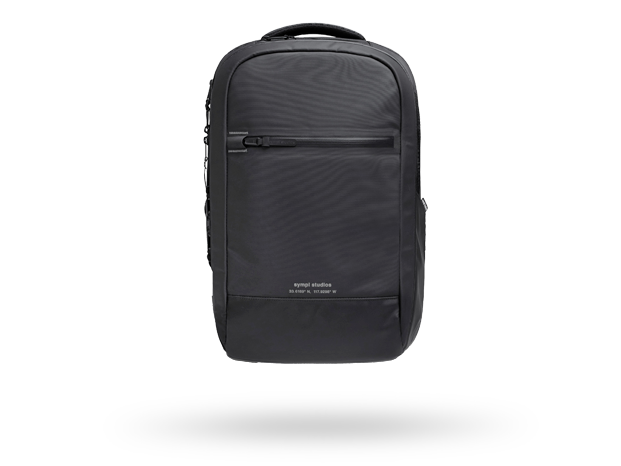
The Sympl Weekender Pack was built to solve the specific frustrations that come up when you're buying in this category: bags that are too heavy before you've packed anything, bags with no interior organization, bags that don't fit in the overhead bin, and bags that look like sports equipment when you're going somewhere that isn't a gym.
It's built from 420D recycled Cordura — Bluesign-certified, made from post-consumer PET, the same material that runs across the full Sympl lineup. It's water-resistant, handles compression without deforming, and doesn't require maintenance.
Key details:
If you're pairing it with daily carry, it works alongside the Sympl Commuter Pack as part of the Performance Carry System — different bags for different trip lengths, same material and build quality throughout.
A weekender bag is typically 30–45 liters in capacity, which is enough for two to three nights of clothing, toiletries, and personal items. This size range fits within most airline carry-on limits (56 x 36 x 23 cm / 22 x 14 x 9 inches), though you should check your airline's specific policy before traveling.
A weekender bag is a compact travel bag sized for one to three nights. A duffel bag is a general-purpose cylindrical bag that can range from gym-sized to large checked luggage. All weekender bags are functionally duffels, but not all duffels are weekender-appropriate — many are too large, unstructured, or lack travel-specific features like luggage pass-through sleeves or organized pockets.
A well-packed weekender typically includes 2–3 outfits, underwear and socks for each day, one pair of shoes beyond what you're wearing, a toiletry kit, phone charger and any cables, and any medications. The 5-4-3-2-1 rule works well: 5 pairs of socks, 4 tops, 3 bottoms, 2 pairs of shoes, 1 hat or accessory.
Most weekender bags in the 30–40 liter range qualify as carry-on luggage on major airlines. Standard carry-on limits are roughly 56 x 36 x 23 cm (22 x 14 x 9 inches). Soft-sided bags often compress to fit even when slightly over. Always verify with your specific airline, as budget carriers have stricter limits.
The Sympl Weekender Pack is built from 420D recycled Cordura with a lifetime warranty. Made for two to three nights, sized for the overhead bin. Part of the Sympl Performance Carry System.